
Heat Styling Without Damage: Protectant, Temperature and Technique
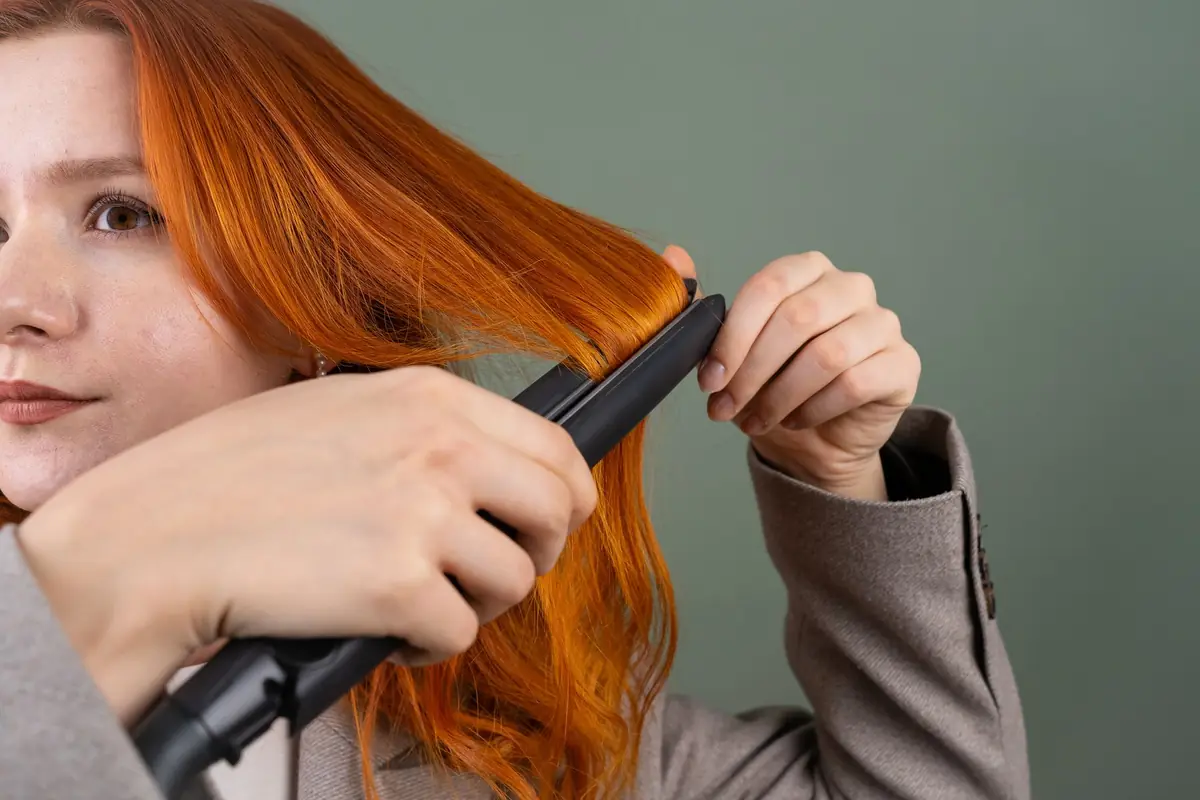
Heat styling is how most event hair gets its shape, and it does not have to leave your hair dry and snapping. Damage builds up mainly from high temperatures, repeated passes over the same section and styling hair that is still damp. Change those three habits and your curls hold better, your ends look healthier and your hair is in better shape for the big day.
How heat affects hair, in plain language
Hair is made mostly of a protein called keratin, protected by an outer layer of overlapping cuticle cells. Heat temporarily reshapes the bonds inside the hair, which is why curls and straight styles work at all. Too much heat, too often, can roughen the cuticle and weaken the hair, leaving it frizzy, dull and more likely to split. Hair that is already bleached, coloured or fine is usually more vulnerable. The aim is to use the least heat that still gets the result you want.
Step one: always use a heat protectant
Heat protectants are sprays, creams or serums designed to be applied before hot tools. They do not make hair heat-proof, but they are widely recommended as a sensible part of any heat routine. To use one well:
- Apply it before blow-drying to damp hair, and again lightly on dry hair before irons if the product directs.
- Distribute it evenly by combing through or spraying section by section, rather than one blast on top.
- Choose a texture that suits your hair: lightweight sprays for fine hair, creams or lotions for thick or coarse hair.
- Let it dry before using a flat iron or curling iron. Never clamp damp hair between hot plates; a sizzling sound is steam escaping from wet hair and a sign to stop.
Shopping for the holidays? Our holiday gift guide pairs heat protectants with the hot tools they go with, and covers a no-heat option for party hair.
Step two: pick a sensible temperature
Many tools now have adjustable settings. There is no single perfect number, but a common approach is to start low and only increase if the style will not hold. As a general guide that many stylists and tool manuals share:
| Hair type | Starting approach |
|---|---|
| Fine, fragile, bleached or damaged | Lowest effective setting; try the low end of the range first |
| Medium, healthy | Low to medium setting |
| Thick, coarse or very curly | Medium, increasing gradually only if needed |
Many flat irons and curling irons run somewhere in roughly the 150–230 °C (about 300–450 °F) range, and the upper end is rarely necessary for most hair. If your tool has no temperature control, use it quickly and less often.
Step three: technique that means fewer passes
One slow, controlled pass on a small section is kinder than five fast passes on a big one. Better technique means less total heat exposure:
- Start with fully dry hair. Blow-dry with the nozzle pointing down the hair shaft to smooth the cuticle, and keep the dryer moving.
- Section properly. Clip hair into manageable sections and work through small pieces, roughly as wide as your tool.
- Keep sections thin so heat reaches all the hair at once rather than cooking the outside while the inside stays untouched.
- Let curls cool before touching. Hair sets its shape as it cools. Pin a curl or leave it alone for a few minutes and it will hold far longer, which means fewer re-dos.
- Skip the ends when you can. Ends are the oldest, most fragile part of the hair. Wrapping from mid-length and leaving the last inch or so out is a popular modern look anyway.
Signs your hair is asking for less heat
- Ends that look white-dotted, split or feel rough
- Frizz that gets worse even after styling
- Curls that will not hold unless you raise the temperature
- Hair snapping when you brush it
- A burning smell during styling (stop and lower the heat)
If you notice several of these, give your hair heat-free days between styling, trim the damaged ends and consider asking a stylist for advice on care.
Aftercare between events
Look after heat-styled hair and it will cooperate better next time. Use a conditioner every wash, and a deeper conditioning treatment occasionally if your hair is dry. Sleep on a smooth pillowcase or with hair loosely tied to reduce friction. Air-dry some days rather than always blow-drying. And be gentle when detangling: start from the ends and work up with a wide-tooth comb.
Heat safety at home
Hot tools are, well, hot. Rest them on a heat-resistant mat, keep cords away from water, unplug them when you are done and let them cool before packing them away. Keep them out of reach of children and pets, and do not leave a plugged-in tool unattended. Many tools have an automatic shut-off feature, which is worth looking for when you choose one.
Frequently asked questions
Does heat protectant really help?
It is widely recommended as part of a heat routine. It reduces rather than eliminates damage, so temperature and technique still matter.
Is it bad to straighten hair every day?
Daily high heat tends to add up. Using a lower setting, fewer passes and some heat-free days is gentler.
Why won't my curls hold?
Common reasons are sections that are too thick, not letting curls cool, hair that is too clean and slippery, or not enough setting product.
Can I use a flat iron on damp hair?
No. Dry hair fully first. Clamping damp hair between hot plates can harm it.
General information only. Patch-test new products and follow your stylist's advice for your own hair and skin.